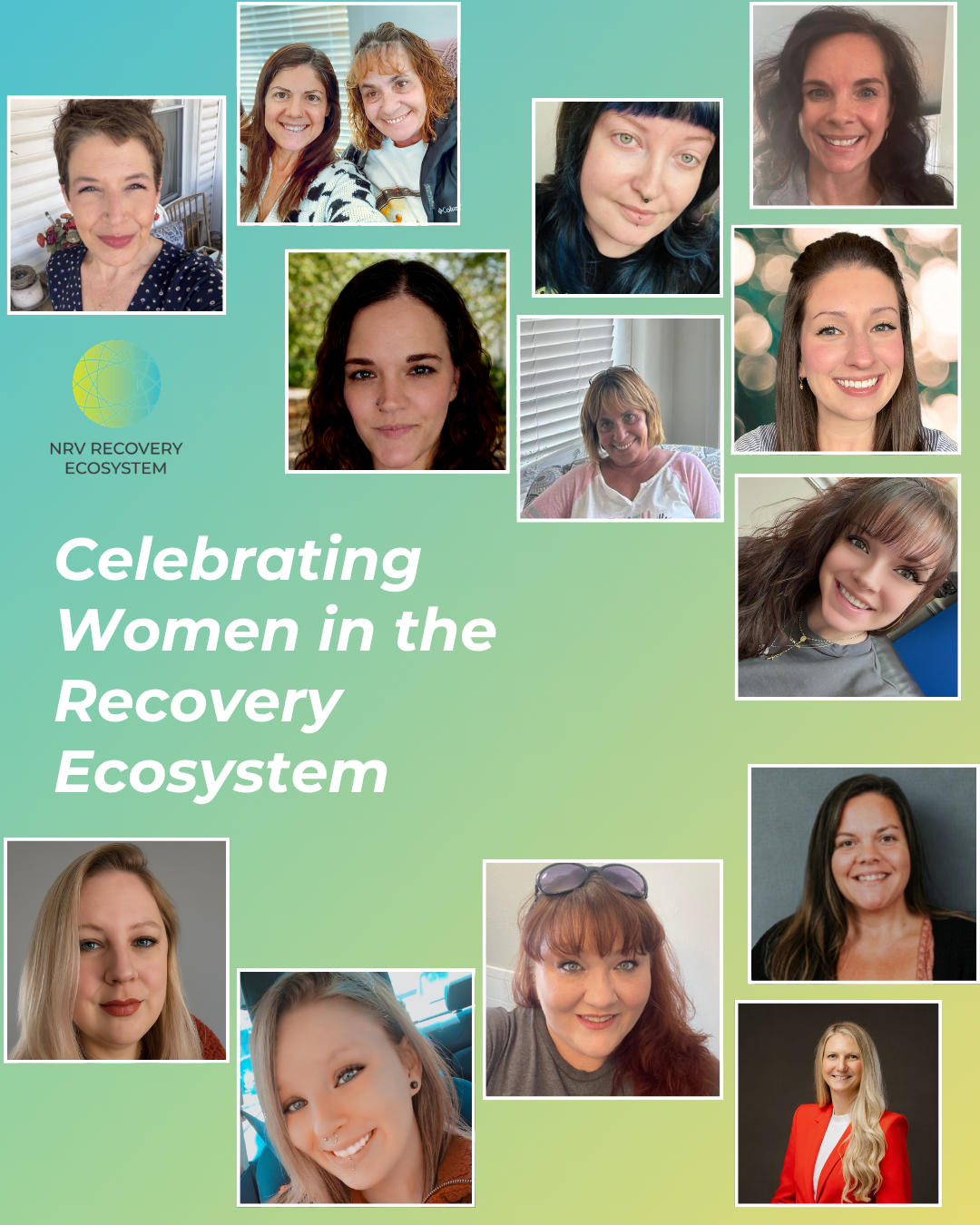
Celebrating Women in the Recovery Ecosystem
March is Women’s History Month- this milestone offers an annual reminder to celebrate and recognize the achievements and strengths of women in our communities. Each year, the National Women’s History Alliance selects a theme to guide conversations and celebrations throughout the month. This year, the theme for Women’s History Month is “Leading the Change: Women Shaping a Sustainable Future.”
In the Recovery Ecosystem, there are many women who work every day to shape the future of the Ecosystem and the broader communities that they call home. As Women’s History Month 2026 comes to a close, please join us in recognizing the amazing women across the New River Valley who are so vital to the success of the Recovery Ecosystem.
Women Across the Recovery Ecosystem
At the Community Health Center of the New River Valley (CHCNRV), a powerhouse group of women coordinates Office-Based Addiction Treatment (OBAT) services and provides collaborative counseling, clinical, and peer support services to patients. The OBAT team includes Allyson Hedge, LCSW, Kayla Vaughn, Cassidy Bias, Kellie Simpkins, Tara Neal, and Melissa Loving, APRN, FNP-C. Allyson, Director of Recovery Programs, shared how the team approaches their work: “If even one small thing plants a seed for one person, maybe that will take root and bloom. Offering hope is one of the most powerful things our team, our program, and our center can do.”
In Floyd, Michelle Harris and Linda McDermott work together to coordinate care at The Well, an eight-month residential women’s program. Michelle and Linda bring decades of experience in recovery work to their roles as Clinical Director and Assistant Director, and they both feel called to support women through recovery. Linda highlighted the importance of lived experience in her work, sharing “Recovery gave me my life back. It restored my relationships, my sense of purpose, and my ability to show up fully for others. I know firsthand the hopelessness, fear, and isolation that addiction can bring—but I also know the freedom, healing, and transformation that recovery makes possible. That lived experience allows me to connect with the individuals I serve in an authentic and compassionate way.”
This sentiment reigns true for many women with lived experience who bring passion and care to their work in the Recovery Ecosystem. Rebecca Akers, Care Resource Coordinator for Rise Above, provides compassionate peer support and connection to life-saving resources like housing, transportation, and food for program participants. She echoed the value of lived experience in her work: “There was a time that I wished I had support when I was homeless and on drugs, and I knew that once I was stable and clean that I wanted to help others that were in similar situations… For me, it does not matter who you are or where you come from but it’s where you are going and how I can help you get there.”
At Instill Mindfulness in Pulaski, multiple women are in peer support roles that help community members feel connected and supported through their recovery journeys. Pamela Edwards, Crisis Response and Outreach Coordinator, blends lived experience, trauma-informed practice, and hands-on navigation to support individuals and families through crisis, recovery, and resource access. Taylor Edmonds and Jessica Bragg also work as Peer Recovery Specialists at Instill Mindfulness, and they bring a dedication for helping others to their roles. Jessica reflected on her commitment to supporting others, sharing, “This work is important to me because it reflects my personal journey and my commitment to giving back. I am passionate about helping others feel seen, supported, and hopeful, and I take pride in walking alongside them as they create meaningful change in their lives.”
Katie Thompson also plays a key role in the Ecosystem in her position as Director of the Office of Prevention and Recovery in Pulaski County. In this role, Katie supports a multi-generational, whole-self approach to programming, working to increase connection and to support families navigating recovery. Katie emphasized the need for collaboration in the Recovery Ecosystem, saying, “It takes every organization, advocate, policy maker, and passionate community member to come together and build systems that support independence, engagement, and hope.”
Another woman working towards prevention and education efforts in the Ecosystem is Cora Taylor, Co-Director of the NRV Resiliency Network. Cora brings robust experience as a substance use counselor to her role in the Network, coordinating efforts to deliver training on Adverse Childhood Experiences (ACEs) and trauma across the New River Valley. Cora feels called to this work because she has seen how substance use and trauma are deeply linked: “My heart is to help families build meaningful relationships and supportive connections that foster resilience and interrupt generational cycles of trauma. When we invest in resilience, we are not only supporting individuals, we are shaping a future where children and families can truly thrive.”
Celebrate Women Every Month
Even though Women’s History Month is coming to a close, we can continue to recognize and support women in the Recovery Ecosystem and in each of our lives. We all know women who strengthen our communities and shape our futures, and we can take a moment any day of the year to recognize them. To learn more about the women we’ve highlighted, check out the highlights on the @togethernrv Instagram Page or the NRV Recovery Ecosystem Facebook.
Along with the women featured here, there are many more across the New River Valley who are working tirelessly to support recovery efforts in their communities. If you have an opportunity, take a moment to thank the women in your life this month and every month!